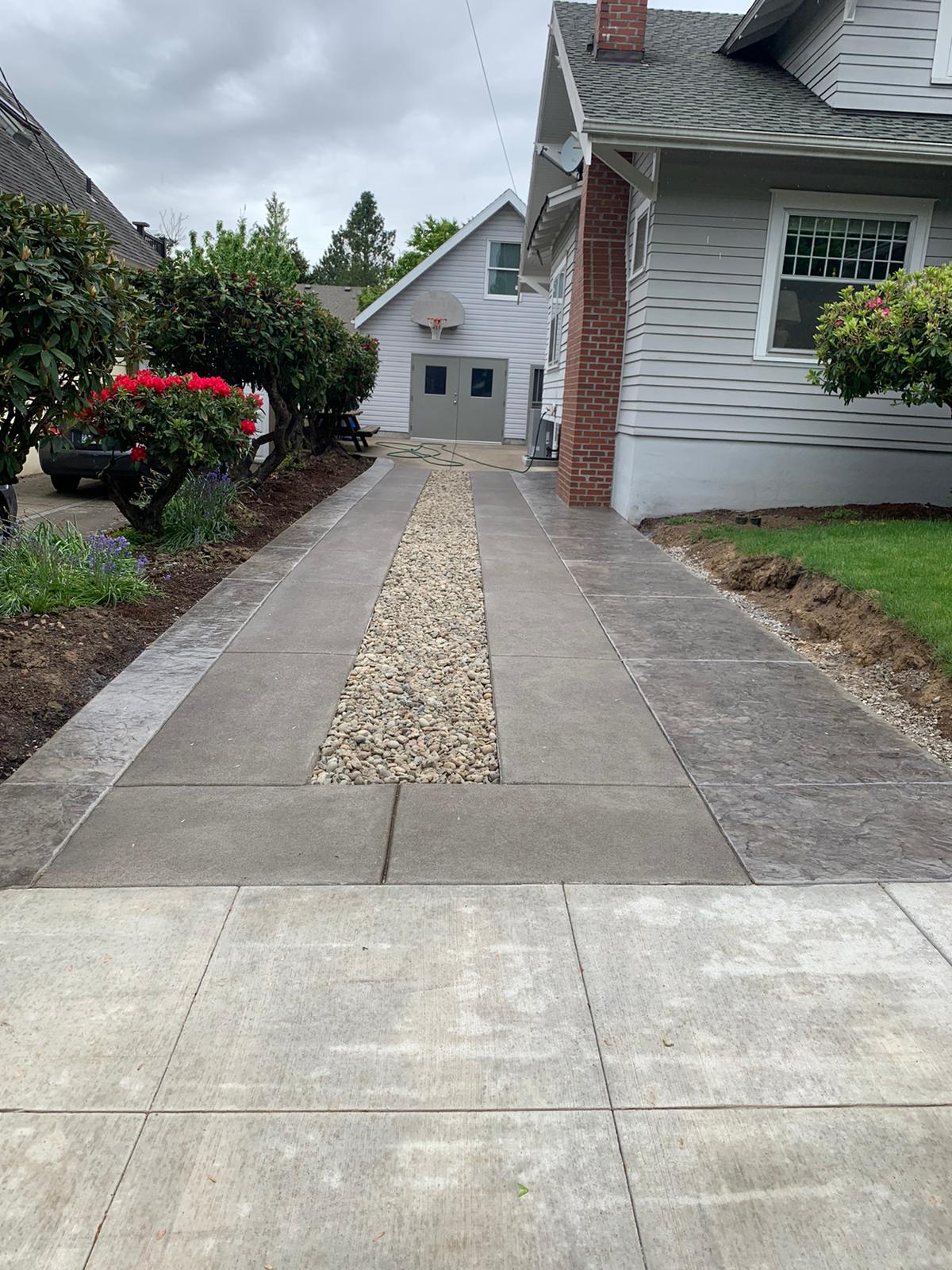
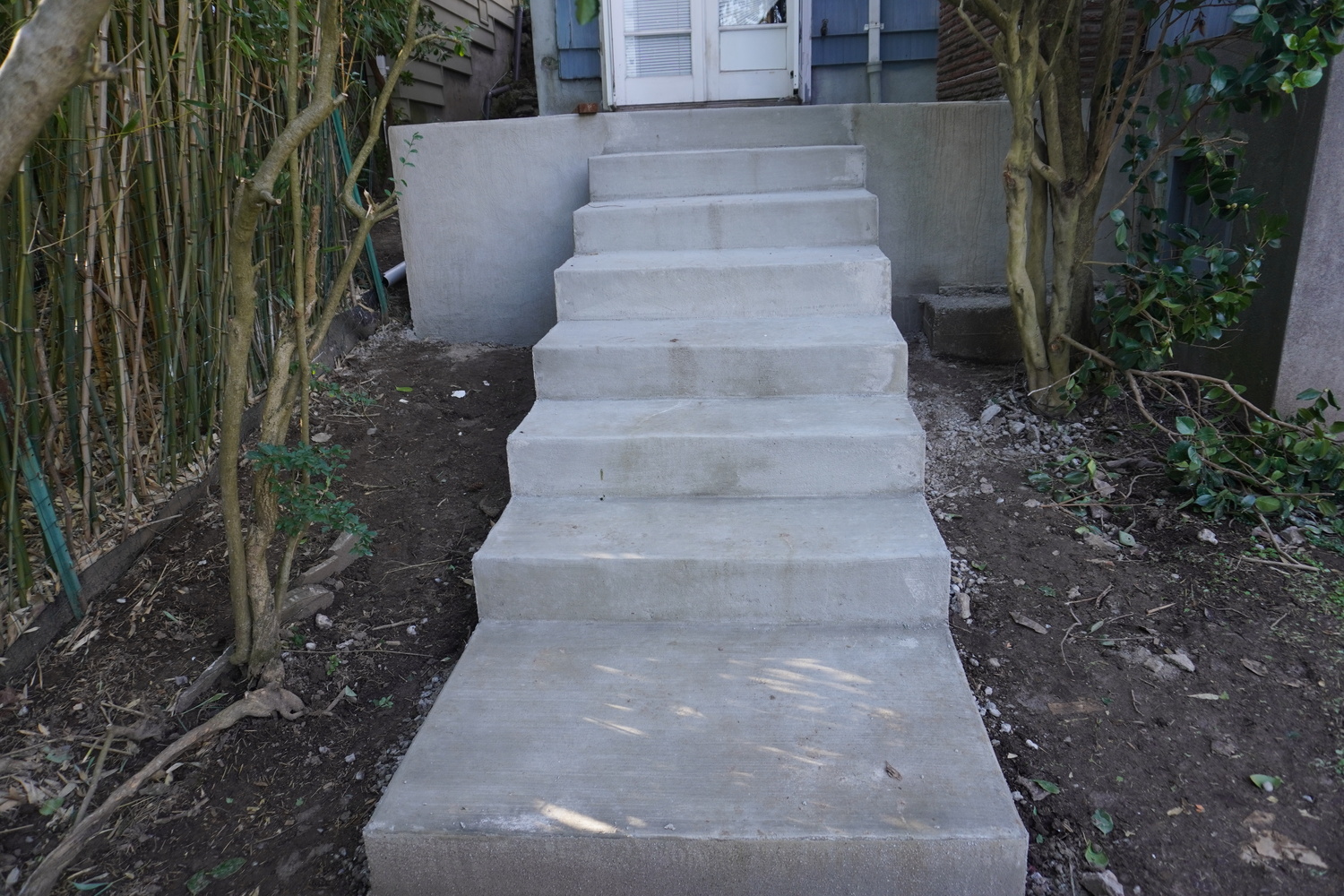
Have you ever thought about what keeps the edges of your street so clean and sturdy for all these years? That nice, solid line on your driveway side is not simply for aesthetics; it is a well-formed curb with the proper concrete.
As professional concrete contractors in Portland, we are often asked: “What kind of concrete do you use to make curbs?” What an apt question: a concrete is not simply a concrete, especially when Portland rains do come down, freeze-thaw cycles are in action, and hefty vehicle loads are pressed onto them.
Whether you are a homeowner preparing to build a new driveway, a property manager looking to maintain sidewalks, or a curious Portlander, this blog will educate you on what type of concrete works best while building a curb, how it is made, and why that is important. We will share our takeaways from our experience as Portland concrete contractors, so you know what to expect in a quality curb-building or repair process.
The Perfect Type of Concrete for Curbs
For the majority of curb work, we use a high-strength air-entrained concrete mix, having a minimum compressive strength of 4,000 PSI (pounds per square inch). This type of mix produces the finest equilibrium between durability, workability, and weather resistance-the three requisites for curbs made in the Pacific Northwest.
Here’s why this specific concrete performs so well:
1. Longevity Against Portland’s Climate
Portland experiences wet winters, periodic snow, and unpredictable temperatures. Air-entrained concrete resists damage from freeze-thaw, which over time can cause concrete to crack or spall. Entrained air introduces small bubbles into the mixture that provide expanding water with a direction to move.
2. Long-Lasting Strength
Curbs are subject to every type of stress, including cars, plows, bikes, and pedestrian traffic. That’s why we apply a 4000 PSI mix or more. It will withstand pressure and prevent your curbs from chipping or breaking easily.
3. Smooth Edges Workability
Curb construction typically requires forming the concrete into certain profiles with special curb forms or equipment. Our well-designed mix lets us lay and finish the curb easily and efficiently before the concrete hardens.
What’s Really in the Mix?
If you’re wondering what we put in the concrete that we pour for curbs, here’s a rough breakdown:
- ✓ Portland cement (yes, it has the same name as our city!)
- ✓ Clean sand and gravel (aggregate)
- ✓ Water (with precise control of the correct consistency)
- ✓ Air-entraining admixtures (to combat freeze-thaw)
- ✓ Optional additives for quicker curing or additional durability
As Pro Concrete Driveway Contractors, we know how modifying even one element of this mix can have an impact on the finished product. It’s an art and a science, and we treat both seriously.
🧱 Types of Concrete Mixes for Curbs — At a Glance
🧩 When to Use What?
Barrier Curb
Recommended: High-Performance (5,000 PSI+)
Why: Needs to withstand impact and city traffic
💡 Pro Tip: Always ask your concrete driveway repair contractor in Portland about the PSI rating and admixtures being used — especially in high rainfall and freeze-prone areas like ours.
When Should You Repair or Replace a Curb?
Concrete curbs last for decades if constructed properly, but they’re not invincible. If you see any of the following, it may be time to seek professional help:
- Cracks more than 1/4 inch wide
- Spalling or chipping edges
- Areas that have been lifted or sunken
- Tree root damage or plow damage
Sometimes, a minor fix is all that is required. But other times, particularly when the surrounding driveway is also on the older side, it will be more prudent to replace the curb altogether.
That’s where our crew at Xcelent Concrete steps in. As professional Portland concrete contractors, we’ll take a look at the damage and share with you the facts of what needs to be repaired. No sales pitch, just straight-up facts.
Final words
Curbs may seem tiny. But then, in substantial form, they play a great deal in the footprint and look of the property. Whether you are a homeowner, property manager, or business owner, don’t overlook them.
The proper concrete mix for curbs is not just about code enforcement. It is about making sure that it’s something that will serve as a good investment. As concrete contractors in Portland with decades of experience, we’ve poured, formed, and fixed more curbs than we can even remember. And we are here to build your curbs just as strong and long-lasting.
If you’re going through curb damage, planning for a new driveway, or need any advice, then please give us a call. A local concrete driveway repair contractor in Portland would be happy to offer you a free quote and address any questions you may have.
Need Assistance With a Curb or Driveway Project?
Reach out to Xcelent Concrete Services– Portland’s Concrete Driveway Contractors. We can make your concrete strong, smooth, and durable.
FAQ: What Kind of Concrete Do You Use for Curbs?
1. What type of concrete is typically used for curbs?
Curbs are usually made with high-strength Portland cement concrete, designed to handle heavy loads, weather changes, and long-term wear. It often includes a mix of cement, sand, gravel, and water with added admixtures for durability.
2. What is the ideal concrete strength for curbs?
Most curbs are built using concrete with a compressive strength of 3000–4000 PSI. This ensures the curb can withstand traffic pressure, impacts, and environmental stress.
3. Are special additives used in curb concrete?
Yes, contractors often use additives like air-entraining agents (for freeze-thaw resistance), plasticizers (for better workability), and fiber reinforcement to improve durability and reduce cracking.
4. Why is air-entrained concrete important for curbs?
Air-entrained concrete helps prevent damage from moisture and freezing temperatures. It creates tiny air pockets that allow water to expand without cracking the concrete—especially important in colder climates.
5. Can curbs be reinforced?
Yes, some curbs include steel rebar or wire mesh for added strength, especially in areas with heavy traffic or where extra durability is required.