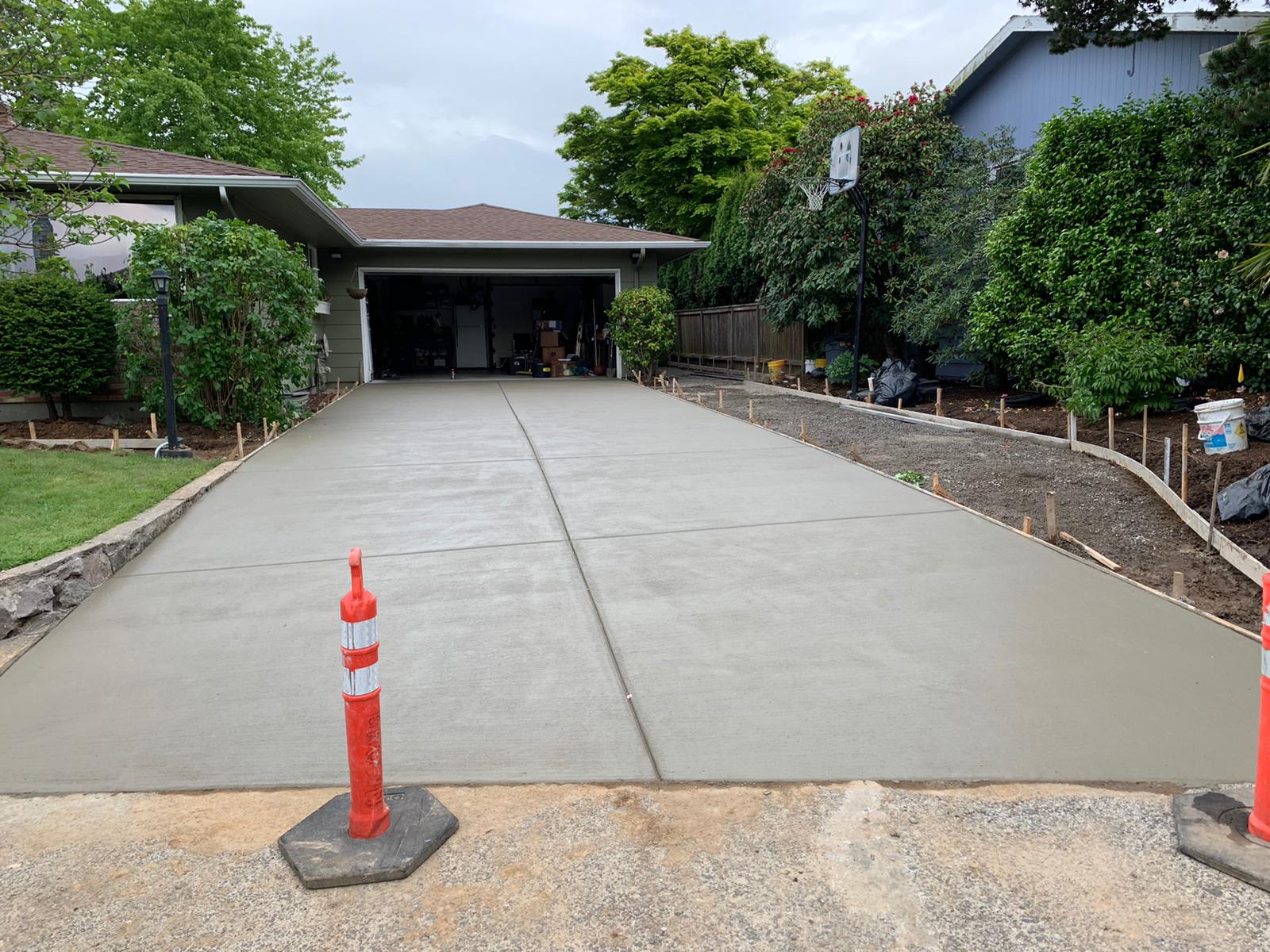
By Xcelent Concrete Services
A concrete driveway has a significant role in your property. It maintains vehicles daily. Safety and appearance are also affected. The concrete starts to wear over time. Many homeowners eventually ask the same question: Should I repair my driveway or replace it entirely? Do you mend the driveway or put in a new one?
This guide explains how to tell the difference. It will allow you to know the typical signs of damage. It goes further to discuss the time when the concrete driveway repair suffices and when it is more practical to install a new concrete driveway.
Our Experience
At Xcelent Concrete Services, we regularly inspect residential driveways showing early cracking, surface scaling, and drainage issues. In many cases, homeowners are unsure whether repair is enough or full replacement is necessary. With years of hands-on experience evaluating aging driveways in varying weather conditions, we often find that early intervention can prevent costly full replacements.
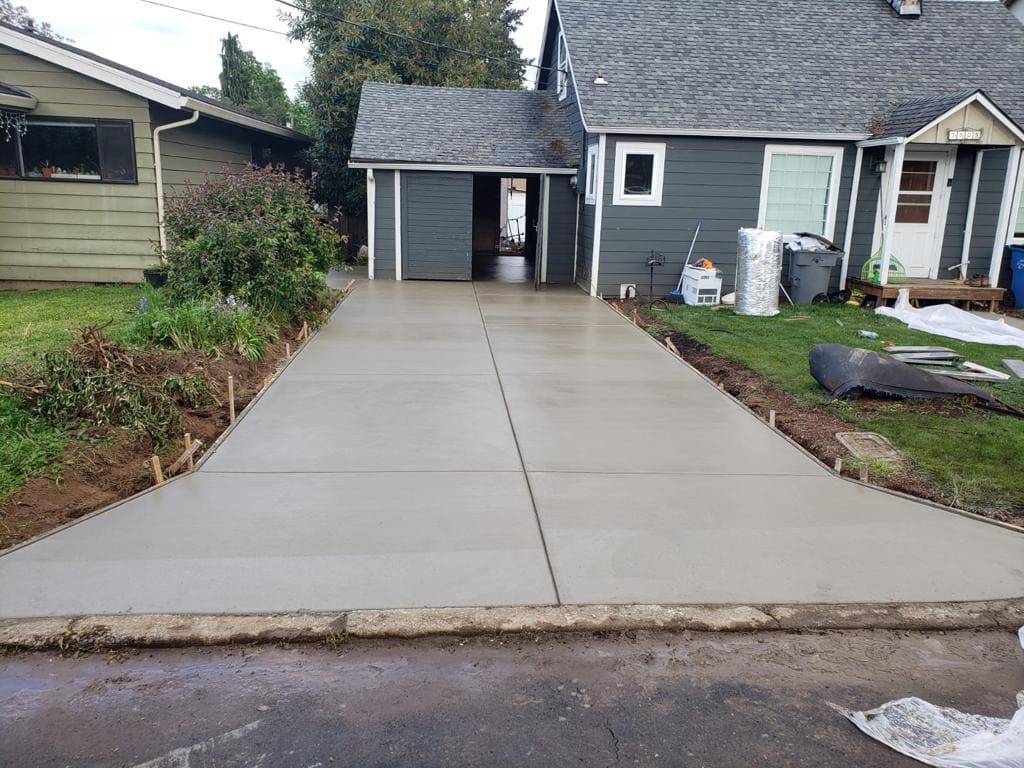
Why Concrete Driveways Crack With Time
In our experience inspecting residential driveways, early hairline cracks often appear within 5–7 years due to seasonal expansion and contraction. Numerous reasons bring harm in the long term.
The weather is a major cause. Heat makes concrete expand. The cold makes it shrink. This movement imposes pressure. Freeze-thaw cycles may cause cracks.
Heavy vehicles add pressure. Cars, trucks, or delivery vehicles use the surface on a daily basis, making the surface weaker.
Water is another issue. Lack of good drainage allows the water to seep through small cracks. With time, such cracks become bigger.
Age also matters. When properly maintained, most concrete driveways have a lifespan of 25 to 30 years. Following that, damage is more widespread.
Typical Driveway Damages.
It is also vital to establish the nature of the damage before settling on a solution.
Small cracks are common. These normally appear in the form of thin lines on the surface. They are normally created as a result of temperature variations.
This is another manifestation of surface scaling. This occurs when the uppermost layer scales or sheds off. It is usually brought about by deicing salts or moisture.
Stains can be oil, rust, or chemical. Although stains may not necessarily impact strength, they may conceal underlying problems.
Several areas of unevenness are more severe. This occurs due to the soil beneath the concrete being moved. It may cause tripping and drainage issues.
Major warning indicators include deep cracks and broken slabs. These frequently contribute to structural failure.
When Concrete Driveway Repair Is The Good Choice
Repair Concrete driveway is effective when there is a small amount of damage. Small problems may be corrected without necessarily substituting the entire surface.
This is a good example of hairline cracks. These tears do not have an influence on the structure. Covering them prevents the intrusion of water.
Surface plate chips can be repaired as well. Patching involves repairing the surface and preventing additional damage.
In case of damage to a single section, spot repair can be applied. This usually happens in cases where one slab subsides or fractures.
Newer driveways are also appropriate for repairs. When the concrete is less than 15 years old, it is common to perform repair as a first option.
Repair of the concrete driveway will increase its lifespan. It is also cheaper compared to replacement. Above all, it solves issues when they are still in the developing stage.
When Replacement Is the Better Alternative.
At times, mending cannot be done. A complete concrete driveway construction is safer in these cases.
Grids of cracking are the most important mark. Cracks that are so expansive indicate that the building could be inappropriate.
In case slabs are sinking or rising, it can be the failure of the base. The surface is not the only problem that should be repaired.
Replacement is also indicated by drainage problems. Puddles around the driveway may erode its foundation.
Driveways that are very old may have to be replaced. The concrete could become weak after decades of usage.
Another indicator is the repeated repair. In case you have to repair the driveway frequently, it can be more cost-effective in the long run to replace it.
The installation of a new concrete driveway is a new beginning. It provides adequate base preparation and contemporary standards.
Considerations of Safety and Compliance
A broken concrete drive is not just an aesthetic problem. It can create safety risks.
Unequal surfaces cause more risk of trips and falls. The tires may get stuck in cracks, or water may accumulate.
Compliance also matters. The local building regulations might demand secure access. The driveways should be able to sustain the weight of vehicles and drainage.
Professional assessment assists in making sure that there is adherence. It also contributes to long-term durability.
How Professionals Evaluate the Driveway Condition?
Professionals do not just consider the damage on the surface. They assess the concrete cover and base state.
- They monitor drainage patterns. Repeat damage is usually a result of poor water flow.
- They also examine the stability of the soil. Shifting and cracking are caused by poor soil.
This test will be used to ascertain whether repairing concrete driveaway walls is adequate or whether they have to be replaced.
Helpful Hints to Prolong Driveway Life
Maintenance is good at delaying large work.
- Seal cracks early. This keeps water infiltration into the concrete.
- Clean stains regularly. The surface can be weakened by oil and chemicals.
- Unless necessary, avoid heavy loads. This slackens the stress on the concrete.
- Ensure proper drainage. Do not leave water at the edges of the driveways.
These measures are in favor of long-term performance and safety.
Final Thoughts
The choice of whether to repair or replace your concrete driveway is based on the nature of the damage, age, and safety issues. Concrete driveway repair is usually effective where minor problems are encountered. The bigger issues tend to need an entire concrete driveway installation.
A professional assessment assists you in making a wise judgment. It is safe, compliant, and value-based in the long run.
To make the best decision and be sure and clear about which approach to use in your concrete driveway, if you are unsure which option is right for your driveway, a professional evaluation can help you make a safe and cost-effective decision.
Frequently Asked Questions
What is the life span of a concrete driveway?
The concrete driveway with high construction can serve for up to 25 years. Its life can be prolonged by proper maintenance.
Can small cracks be ignored?
Small cracks can not be overlooked. Sealing them early is useful in averting greater damage.
Is the repair of the concrete driveway permanent? In case the damage is small, it can be fixed in a couple of years. Serious concerns will recur in case of a weak base.
When is a complete concrete driveway installation the order of the day?
The cracks should be extensive, the slabs should be uneven, or the driveway should be very old to be replaced.
Is the weather an influencer of decisions regarding repairs?
Yes. Climate influences cracking, moisture damages and long-term durability.
Does repair enhance appearance?
Yes. When the damage is not severe, repairs may enhance functionality and appearance.