If you want your concrete to be more durable, cleaner, and resistant to damage, concrete sealing is a great investment for you to make. It offers protection against water, stains, cracking, UV radiation, and wear-and-tear, while lowering repair costs significantly.
From a concrete driveway sealer to a concrete patio sealer and a concrete floor sealer, sealing your concrete can save you years of maintenance and keep your concrete looking fresh at all times.
What Is Concrete Sealing?
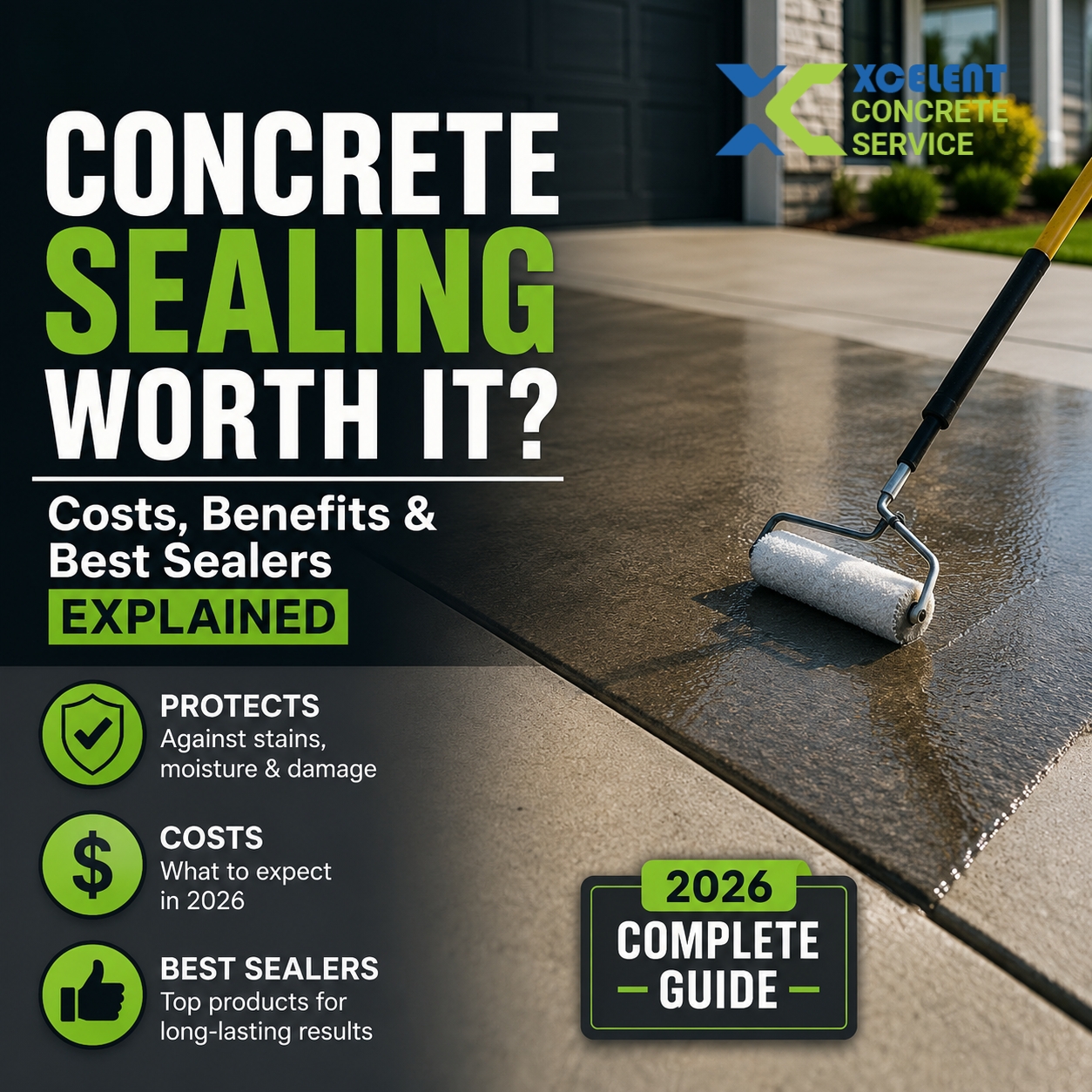
Concrete sealing is the application of an additional protective coating on concrete surfaces. By adding a sealer, you create a layer of protection that keeps contaminants like moisture, dirt, oil, and chemicals out of your concrete.
Most people believe concrete is tough enough to withstand whatever it encounters, without additional protection. While that is true in some cases, concrete is still porous, which allows moisture to get into it and cause damage.
Without concrete sealing, the following issues may arise:
- Cracks on the surface
- Water damage
- Color fading
- Mold formation
- Oil stains
- Dirt accumulation
- Freezing and thawing damage
- A good concrete sealer can help you avoid this.
Why Concrete Sealing Matters in 2026
Today, concrete surfaces are subjected to more stress than ever before due to harsh weather conditions, traffic load, and the presence of various chemicals and moisture.
From firsthand accounts from professional contractors, an unsealed concrete surface tends to wear out after just 2-3 years. A sealed concrete surface will tend to last longer.
In addition, professional contractors report that a sealed concrete surface prevents moisture penetration by up to 95%. This depends on the type of sealant and the condition of the surface.
Today, more property owners view concrete sealing as preventative maintenance rather than as optional.
Main Benefits of Concrete Sealing
1. Protection From Water Damage
Water can be very damaging to any concrete structure.
Water may seep into small pores on the concrete and cause damage.
A concrete sealer keeps water from seeping and protects against:
- Freeze-thaw damage
- Surface erosion
- Mold and mildew growth
- Salt damage
This is particularly crucial for regions that receive a lot of rainfall or have severe winter seasons.
2. Can Help Prevent Future Cracks
Cracks are quite common in concrete surfaces.
Using a crack sealer in concrete at an early stage will prevent the entry of water and dirt into cracks. This prevents further damage.
It is always a good idea to get your concrete sealed when there is visible damage. You should first seal concrete cracks.
3. Enhances Appearance
A concrete surface becomes clean and fresh after sealing. Many types of sealants can improve color and give an enriched finish.
Examples include:
- Concrete patio sealer makes any outdoor area brighter and more appealing.
- Concrete driveway sealer prevents fading and tire scuffing marks.
- Concrete floor sealer gives a fresh finish indoors and reduces dust.
Types of finishes that sealants offer range from a natural matte finish to a wet-looking gloss finish.
4. Makes Cleaning Easier
Concrete that isn’t sealed absorbs contaminants quite fast.
Concrete that’s sealed is easier to keep clean since the contaminants remain on the surface instead of absorbing into the material.
Some of the places where this works well include:
- Garages
- Basements
- Patios outside
- Commercial premises
- Drive ways
Cleaning may involve just regular sweeping and an occasional wash.
5. Extends the Life of Concrete
Replacing concrete is costly. Sealing helps postpone the need for replacement.
An adequately sealed concrete surface may serve for decades more than one that is unsealed.
Contractors acknowledge that spending money on concrete sealing will help save thousands of dollars later on in restoration expenses.
What is the Cost of Concrete Sealing?
This depends on several factors, including:
- Size of surface
- Sealer used
- Condition of concrete
- Labor charges
- Location
Here are the common 2026 price ranges:
| Surface Type | Average Cost |
| Concrete driveway sealer | $1.50–$4 per sq. ft. |
| Concrete patio sealer | $1.25–$3.50 per sq. ft. |
| Concrete floor sealer | $2–$5 per sq. ft. |
| Concrete crack sealer repairs | $100–$500+ |
DIY sealing costs less upfront, but professional application usually delivers better long-term performance.
Best Types of Concrete Sealers
All sealers are not the same. Selection of the appropriate product is key.
Acrylic Sealers
Suitable for:
- Decorative surface applications
- Patios
- Walkways
Strengths:
- Reasonably priced
- Easy application process
- Improves aesthetics
Weaknesses:
- Shorter shelf-life
- Reapplication is necessary more frequently
Penetrating Sealers
Suitable for:
- Driveway applications
- Outdoor concrete
- Areas with moisture exposure
Strengths:
- Provides deep penetration
- Highly effective against water
- Natural look
Weaknesses:
- The initial cost is relatively high
- Generally considered the best choice for concrete sealing protection.
Epoxy Sealers
Suitable for:
- Garage floors
- Concrete floor indoors
Strengths:
- Chemical resistant
- Durability
- Provides shine
Weaknesses:
- Becomes slippery
- Poor UV resistance in outdoor use
- Sealers based on epoxy are used frequently on concrete floor surfaces.
Polyurethane Sealers
Suitable for:
- High traffic applications
- Luxury applications
Strengths:
- Very durable
- Resistant to scratching
- Long-lasting
Weaknesses:
- Higher cost
- Often employed for decorative purposes.
How Often Should Concrete Be Sealed?
Most experts recommend resealing every:
- 2–3 years for driveways
- 3–5 years for patios
- 4–5 years for indoor floors
However, weather exposure and traffic levels can change these timelines.
Signs you need resealing include:
- Water is soaking into the surface
- Visible fading
- Surface dusting
- New staining
- Increased cracking
DIY vs Professional Concrete Sealing
DIY Concrete Sealing
DIY concrete sealing is effective in small jobs when the surface is in great condition.
Benefits:
- More affordable
- More flexible schedule
Disadvantages:
- Potential for inconsistent application
- Improper product choice
- Inadequate surface prep
The majority of DIY mistakes occur due to improper cleaning and surface prep prior to sealing.
Concrete Sealing by Professionals
Professional applicators know about:
- Proper surface preparation
- Moisture testing
- Crack repair
- Compatibility of products
- Application techniques
These are typically the reasons why professional concrete sealing lasts much longer.
When it comes to large driveways or patios, professional sealing is always a more profitable option.
Mistakes to be Avoided When Using Concrete Sealer
Sealing Dirty Concrete Surfaces
- Oil, dust, and stains could keep the sealer from adhering properly.
- Ensure that the surface is clean before sealing.
Sealing on Unrepaired Concrete Surface
- Concrete sealers should not be applied to damaged concrete surfaces without repairing them first.
- Apply concrete crack sealer before applying the sealer to cracks.
Applying Inappropriate Concrete Sealer
Surfaces require specific sealers.
For instance:
- Concrete driveway sealer requires resistance to vehicular traffic and weather elements.
- Concrete patio sealer requires resistance to UV and moisture penetration.
Is Concrete Sealing Really Worthwhile?
Yes, in most cases – at least from our point of view.
By sealing concrete, you safeguard your investment, enhance its looks, minimize maintenance efforts, and even prevent costly fixes in the future.
Considering the price of sealing versus the costs of repairing damaged concrete, the initial expense of using the proper concrete sealer is fairly low, regardless of the area you wish to protect.
Conclusion
Concrete surfaces face constant stresses in terms of weather, loads, moisture exposure, and everyday use. Without any protective measures, deterioration occurs much more quickly than some would think.
Having the concrete sealer professionally applied by experts will be a wise decision, helping to prolong its lifespan and make it look and function better for years to come. Here at Xcelent Concrete Services, we strive to provide clients with the information they need to make educated choices.