A concrete driveway in Portland is always subjected to the effects of moisture, changing temperatures, and ground movement. Eventually, all these factors result in cracks. Some of the cracks only affect the superficial layer. In other cases, however, the strength and durability of the driveway are severely compromised.
Being aware of how to fix cracks early might save you from expensive damage. In addition, proper repairs will go a long way in comforting the concrete driveway maintenance for years to come, and full replacement will be less often needed.
The present document covers how cracks come into being, how to evaluate them, and how to properly repair them in Portland, Oregon.
Why Concrete Driveways Crack in Portland
The weather in Portland is the prime factor in concrete deterioration. The rainy season is very frequent, winters are mild, and there are temperature changes all year round.
The most common reasons for cracking are:
Water penetration
Rainwater gets into tiny holes. When it freezes, the water turns into ice, thus increasing its volume and creating pressure within the concrete.
Soil movement
The moisture in Portland soil often changes and causes it to expand and contract. The working of the ground below the slab puts stress on it.
Freeze-thaw cycles
Even if freezing is limited, it can still weaken concrete if water is trapped inside the cracks.
Improper installation
Bad base preparation or improper curing during the installation of concrete driveways can lead to early cracking.
Heavy loads
The constant parking of heavy vehicles increases the number of cycles of stress, and weak areas are thus easily broken.
Identifying the cause makes it easier to choose the proper method of repair.
Different Types of Concrete Driveway Cracks
Not every crack will require the same form of treatment. Determine the cracking type before proceeding with the repair.
Hairline Cracks
These are very minute and not very deep. They most often happen when the surface of the concrete shrinks as it cures. The cracks are mainly for aesthetic purposes, but still need to be sealed.
Shrinkage Cracks
The cracks are caused by the concrete losing moisture as it dries. Such cracks are very frequently found in newly laid driveways, and they normally run straight.
Settlement Cracks
The cracks result fromthe movement of the soil underneath the driveway. They are larger and more likely to be uneven.
Structural Cracks
The presence of wide cracks that enlarge with time may signify the existence of severe structural issues underneath the slab. These situations need the involvement of professionals for assessment.
When to Repair Driveway Cracks
Cracking should be dealt with immediately as soon as it is detected. Postponing the repair will give water the chance to penetrate the area and thus intensify the damage.
In Portland, the most appropriate time to crack repair is dry weather. The period from late spring to early fall is the most favorable for proper bonding and curing.
Tools and Materials Required
Basic crack repairs involve the use of commonly found materials:
- Wire brush or hard-bristle broom
- Concrete cleaner or gentle detergent
- Garden hose or high-pressure water sprayer
- Concrete cracking and filling material or patching compound
- Caulking gun (for liquid fillers)
- Putty knife or trowel
- Safety gloves and eye protection
Employ materials that are rated for outdoor concrete and moist climate areas.
Step-by-Step: How to Repair Cracks in a Concrete Driveway
Step 1: Clean the Crack
To get started, get rid of all dirt, debris, and any concrete that is not solidly attached. A wire brush is the best tool for cleaning inside the crack. After cleaning the crack, rinse it and then let it dry completely. A clean crack offers the possibility of good adhesion.
Step 2: Prepare the Crack
When dealing with wide cracks, cut back just a bit so that the filler can get a good hold. By doing this, you are enhancing the durability of the repair. Don’t forget this part for the deep cracks.
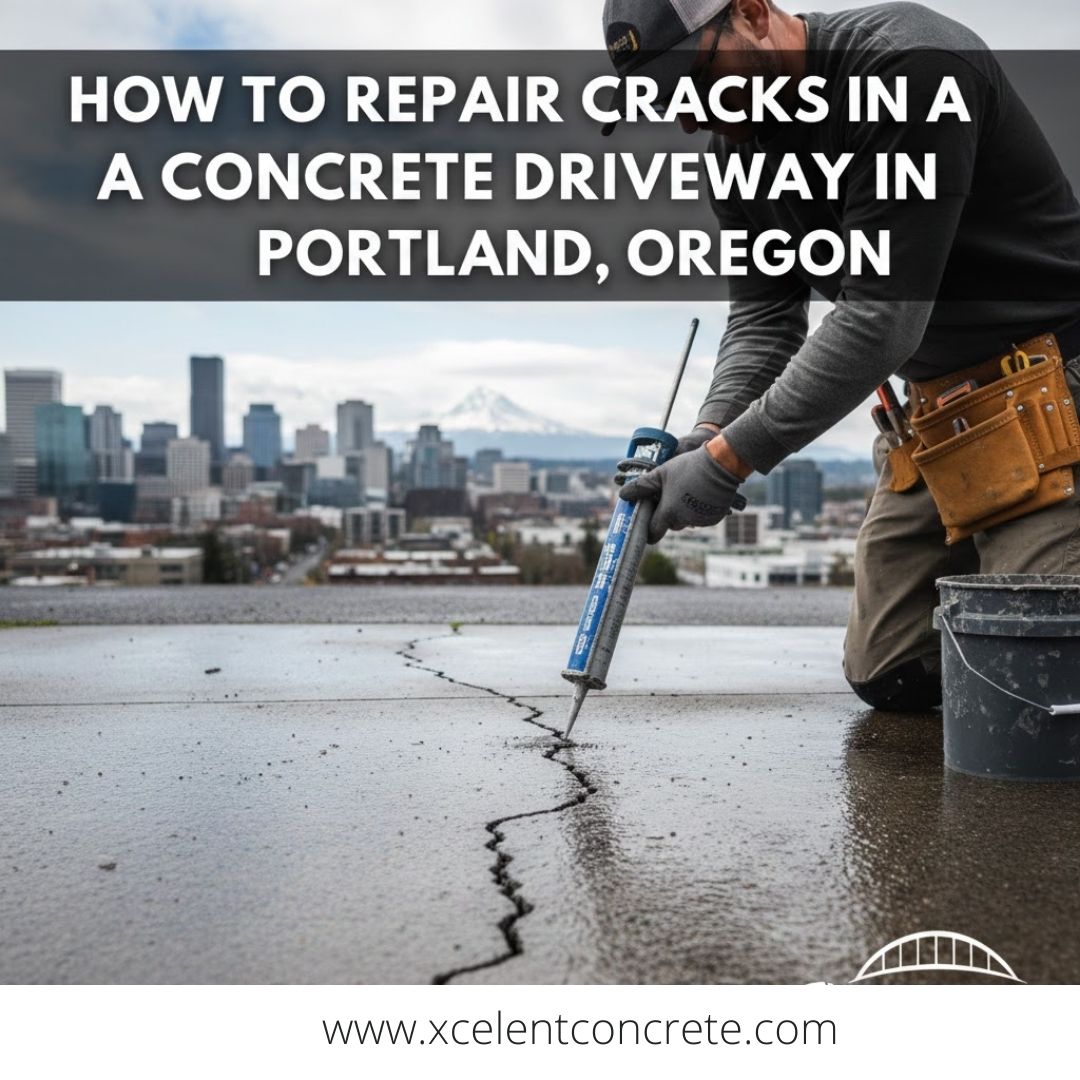
Step 3: Apply the Crack Filler
First, make the right choice according to the crack size.
- Choose liquid concrete filler for very fine cracks.
- Choose a patching compound for wider or deeper spots.
Then, apply the filler smoothly and evenly. Make sure there are no air pockets.
Step 4: Smooth the Surface
Take a putty knife or trowel and make the filler even with the driveway surface. This will avoid the issue of water pooling.
Step 5: Allow Proper Curing
For the curing times recommended by the Manufacturer, follow them strictly. During this time, keep the area dry. Do not drive on the surface until it is completely cured.
Sealing After Repair
The process of sealing the driveway gives an additional layer of protection. The sealants work by preventing moisture from entering and thus reducing the likelihood of subsequent cracks.
In the case of a concrete driveway in Portland, sealing every few years is a part of long-term concrete driveway maintenance. It also gives an upgraded water and surface wear resistance.
When Repairs Are Not Enough
Some cracks are a sign of deeper issues. If the repair is not effective when:
- Cracks continue to widen
- Some part of the concrete is getting lower
- More than one crack appears in a particular area
- Water is trapped under the slab
Then, in such scenarios, either partial replacement or full concrete driveway installation might be needed. An expert inspection can assess the problem and point out the safest solution.
Preventing Future Cracks
The cost of long-term repairs can be minimized by preventive measures.
Among other things, these practices are as follows:
- Maintaining the proper drainage
- Heavy loads should not be placed in the same spot
- Regularly seal the driveway
- Promptly repair small cracks
- Professional installation should be ensured when replacing concrete
The maintenance of a consistent concrete driveway will prolong the life of the surface.
Final Thoughts
Crack repair is an essential measure of protection for a concrete driveway in Portland, Oregon. The local climate is a factor that makes prompt action a necessity. Proper cleaning, using the right materials, and timely sealing will save you money by preventing extensive repairs.
For homeowners who are not sure about the status of cracks or who do not know the long-term solutions, professional assistance guarantees safety and durability.
Xcelent Concrete Services offers professional advice and reliable concrete solutions. Let us help you get it right and protect and maintain your driveway the right way.
FAQ: Concrete Driveway Crack Repair in Portland
How long do concrete crack repairs last?
Cracks repaired properly may last for many years. The longevity is determined by the weather exposure, drainage, and maintenance.
Can cracks be repaired in wet weather?
Not at all. Moisture inhibits proper bonding. Thus, repairs should be done during dry conditions.
Are small cracks a serious problem?
Generally, small cracks are cosmetic but can enlarge with time. Early intervention helps to prevent water damage.
Is sealing required after crack repair?
Due to the heavy rainfall, sealing is highly recommended in Portland. It increases the lifespan of the repair.
When should a driveway be replaced instead of repaired?
When the cracks are an indication of structural failure or widespread settlement, replacement is the only option.