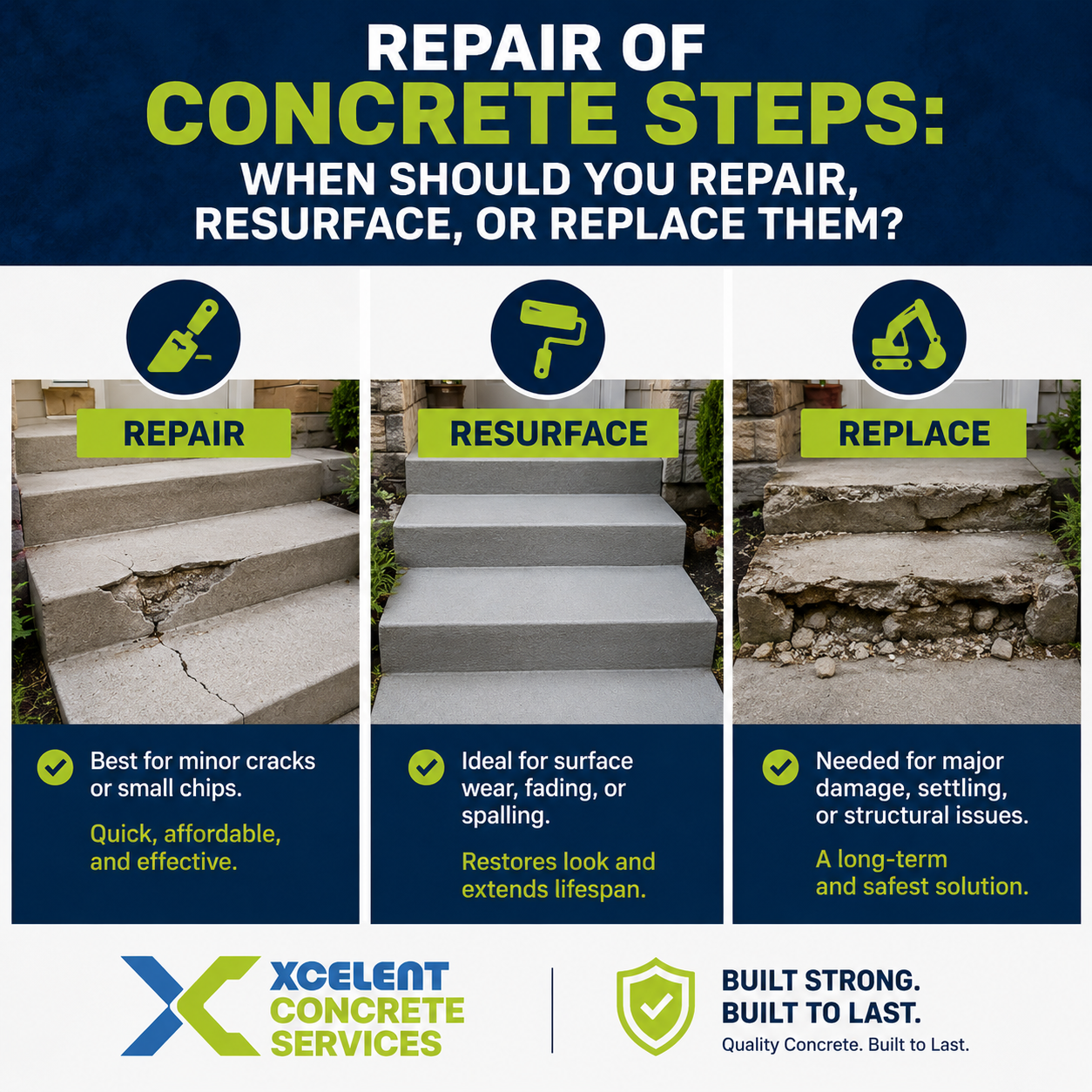
There are times when concrete steps can be repaired rather than replaced; however, the most appropriate solution is dependent on the level of damage. Small cracks, minor chipping, and surface wear are generally easy to repair or resurface; however, if the cracks or surface deterioration are deep, or if the foundation has sunk, replacement may be necessary to ensure long-term safety and durability.
Concrete stairs are constantly subjected to foot traffic, moisture, freeze-thaw, and soil erosion. Even sturdy steps will develop cracks, chips, or uneven settlement over time. It’s about understanding the difference between a simple repair and a replacement to make the right choice at the right time.
Understanding Common Concrete Step Damage
It is important to know what causes damage before deciding whether or not to repair, resurface, or replace concrete stairs.
Some of the most common problems include:
- Surface cracks
- Concrete spalling or flaking concrete.
- Chipped edges
- Uneven settling
- Water damage
- Rusting reinforcement
- Rubble areas or loose areas
At Xcelent Concrete Services, we have had our fair share of older concrete stairs that are visibly damaged, but the damage is not just on the surface. It is often possible that the cosmetic crack will form because of structural movement below the steps, as well.
One such homeowner called us when they saw a few hairline cracks around the corners of their front steps. At the time of inspection, it was observed that there was poor drainage around the foundation, which was resulting in water seeping under the concrete. They solved the drainage problem and fixed the cracks before they got bigger and more serious, and thus saved themselves from much more costly replacement later.
That is why it is important to evaluate before starting any concrete steps for repair.
When Concrete Step Repair Is the Right Choice
To remedy minor to moderate damage, you may not have to replace the staircase itself, as there are various solutions available to fix the damage.
Concrete steps can be repaired if you see the following signs:
Repair is typically the best option when:
- Cracks are small and stable, and have no signs of rockslides.
- Damage is contained to specific areas
- The steps are flat and in good repair.
- There is minimal water penetration
- The overall strength of the concrete surface is still good.
Common repair techniques are:
- Crack filling
- Patching chipped areas
- Rebuilding corners
- Applying bonding agents
- Sealing the surface
Minor Cracks and Surface chips
Older concrete stairs are prone to having hairline cracks. These cracks can occur from temperature fluctuations, humidity, or settling. They can sometimes be fixed if detected early by epoxy injection or by the use of special concrete patching compounds.
Slight chips around the steps can be fixed as well. Proper patch materials can not only shape and appear the steps back the way they were meant to be, but can also stop additional deterioration from occurring.
Why Fast Repairs Matter
Putting off repairs can let moisture work its way into the concrete. Freeze-thaw in colder climates can cause cracks to grow quickly and cause damage to the structure.
There are cases of homeowners neglecting to repair a small crack for a few seasons and then finally having to deal with the resulting extensive spalling and internal damage. This was a straightforward repair, but ended up being a complete staircase rebuild.
Concrete stairs can last much longer if they are kept properly maintained.
In some instances, it is best to use Resurfacing Concrete Stairs. In certain cases, it’s best to use Resurfacing Concrete Stairs.
The steps may be structurally sound but may have become worn, stained, or aged. In these situations, resurfacing could be the most suitable solution.
Concrete Resurfacing: What is it?
Resurfacing is the process of placing a thin overlay or layer over the top of the existing concrete stairs for both restoration and increased durability.
This is a good process for:
- Surface discoloration
- Minor pitting
- Light scaling
- Cosmetic imperfections
- Slight surface cracking
- Benefits of Resurfacing
Resurfacing can:
- Improve curb appeal
- Restore slip resistance
- Protect against future moisture damage
- Create a longer lifespan for the stairs.
- Make stairs last longer.
Be within the budget of replacement cost
Decorative finishes, like stone textures or stamped concrete designs, can also be reproduced with modern resurfacing products.
When Resurfacing Concrete Stairs Makes Sense
If the underlying concrete is unstable, then resurfacing will not be suitable. The overlay will only mask the problem if the steps are sinking, separating, or crumbling within.
It is always recommended to do a professional inspection before resurfacing to make sure of the soundness of the structure underneath.
The best time to replace concrete stairs will depend on the specific situation.
In certain cases, replacement is the most effective and safe strategy for the long-term.
Major Warning Signs
When you see the following signs, you probably need to replace concrete stairs:
- Large structural cracks
- Irregular stairs or settling, deep settling.
- Extensive crumbling
- Exposed reinforcement bars
- Significant water damage
- Multiple failed repairs
- Poor footwork and a lack of stability in stepping
Structural Damage is Not to Be Ignored
A major homeowner error is continually patching up the structural failure of concrete stairs over and over. Cosmetic repairs will not correct foundation movement and/or significant internal deterioration.
The beautiful house we worked on recently has been “treated” over the years with several patch products that were bought commercially. Sadly, the stairs were already out of alignment with the main building because of soil settlement. These patches were a temporary fix, but eventually, it became unsafe to use the staircase.
Following removal, the stairs were rebuilt to improve their drainage and to strengthen footings to reduce movement.
Safety Concerns
Damaged concrete stairs are not only bad-looking, but they can also be dangerous. Risers can be uneven, surfaces can be loose, and there can be deep cracks that pose trip hazards.
When the stairs are loose or are beginning to move, it’s typically best to replace them.
Repair vs. Resurface vs. Replace: How to Decide
The decision will be based on three major factors:
1. Structural Integrity
Repairs or resurfacing can be successful if the structure itself is in good shape. When the foundation or internal concrete is damaged, it is sometimes necessary to replace it.
2. Extent of Damage
If it is only localized damage, it can be repaired. When there are multiple areas of deterioration, it usually indicates replacement.
3. Long-Term Cost
While many homeowners think of the short-term cost, the cumulative cost of frequent repairs may ultimately exceed the value of replacement.
Any contractor should thoroughly assess the existing state of the stairs and the performance they are likely to require in the future before suggesting a solution. It helps to fix concrete stairs in advance.
Why Professional Assessment Matters
DIY patch kits can temporarily improve appearance, but professional evaluation identifies hidden issues that homeowners may miss.
At Xcelent Concrete Services, our inspection process includes:
- Checking for structural movement
- Identifying water drainage issues
- Examining surface deterioration
- Testing concrete stability
- Evaluating safety risks
This approach helps determine whether the existing concrete stairs can realistically be restored or whether replacement will provide better long-term value.
An honest contractor should explain both the advantages and limitations of each option rather than automatically pushing for full replacement.
How to Prevent Future Concrete Stair Damage
Maintenance can help prolong the life of concrete steps.
Keep Water Away
Water happens to be one of the leading causes of concrete degradation. Ensure that gutters, downspouts, and landscaping keep water from reaching the stairs.
Concrete Sealing
A good seal protects against water intrusion, staining, and freeze-thaw action.
Repair Damage When They Occur
Repairing small damages early prevents big structural issues later.
Do Not Use Aggressive De-Icing Products
Some de-icing products can cause concrete degradation more rapidly than usual. Be careful to use only concrete-friendly de-icers during winter.
Final Words
Depending on the condition of your concrete steps, the best method of repairing concrete steps can vary widely. Sometimes you might need to repair small cracks and chips only; other times, resurfacing would be all that’s needed. But if the stairs show signs of significant structural damage, settling, or degradation, they will need complete replacement.
It all begins with an accurate assessment of the condition of your concrete stairs. Only a professional can tell if there is any structural integrity left in them or whether replacement will save you money and effort.
It is always best to choose the right solution from the very beginning.
Author Bio
Xcelent Concrete Services specializes in residential and commercial concrete installation, repair, and restoration. With hands-on experience repairing concrete stairs, walkways, patios, and foundations, the team focuses on long-term durability, structural integrity, and honest recommendations tailored to each project.
Frequently Asked Questions
What is the life of fixed concrete stairs?
Repairable concrete stairs can last for several years if the concrete stairs have a sturdy structure and are free from moisture issues.
Are concrete stairs repairable?
Yes, it is possible to repair cracks on concrete stairs by using particular fillers, injections, or patches. In case of extensive damage, replacement becomes mandatory.
Is resurfacing less costly than replacing concrete stairs?
Resurfacing is significantly less costly compared to stair replacement if the concrete stairs are in good condition.
How do I know that my concrete stairs are unsafe?
Some of the signs of an unsafe concrete staircase are large cracks, loosening areas, settling, movement, and deteriorated concrete stairs.
Why do concrete stairs get cracked?
Generally, concrete stairs may crack due to moisture exposure, freeze-thaw cycle, soil movement, loading weight, or simply age-related issues.