Retaining walls aren’t about appearances alone, retaining walls also function as a means of keeping back soil and stopping erosion. But perhaps one of the most frequent errors that homeowners commit when they install a Concrete retaining wall is not including proper drainage. Without it, water builds up behind the wall, creating pressure that can cause cracks or even collapse over time. If you’re planning to build a curved wall or already have one, adding a drain behind it is a smart move. Let’s break down the process in a way that’s easy to understand.
Why Drainage Matters for Retaining Walls
Think about what happens when it rains. Water doesn’t just disappear; it seeps into the soil. If there’s no way for that water to escape, it starts pushing against the wall. Over months or years, this pressure called hydrostatic pressure can damage even the strongest wall. This is why Portland concrete contractors always include drainage in their designs. For a curved wall, the process is the same, but you’ll need to plan carefully to match the curve.
Materials You’ll Need
It’s best to prepare some basic supplies and tools before you begin:
- Gravel or crushed rock
- Perforated drainage pipe
- Landscape fabric
- Shovel and wheelbarrow
- Level and measuring tape
It is simple to find the above items in any hardware store, and no special training is required to operate them. Nevertheless, if the task seems complicated, concrete contractors in Portland are the best option since they have experience in making the job accurate and durable.
Dig Behind the Wall
The initial step involves digging a trench directly behind your wavy retaining wall. The trench should be roughly 12 inches wide and deep enough to accommodate the drainage pipe and a generous layer of gravel.
Ensure the trench is sloped slightly downwards as you follow the curve of your wall evenly. A level may be used in assisting you in doing this.
💡 Pro Tip: Mark the trench path with spray paint before digging to ensure consistent width and proper curve following.
Install the Drainage Pipe
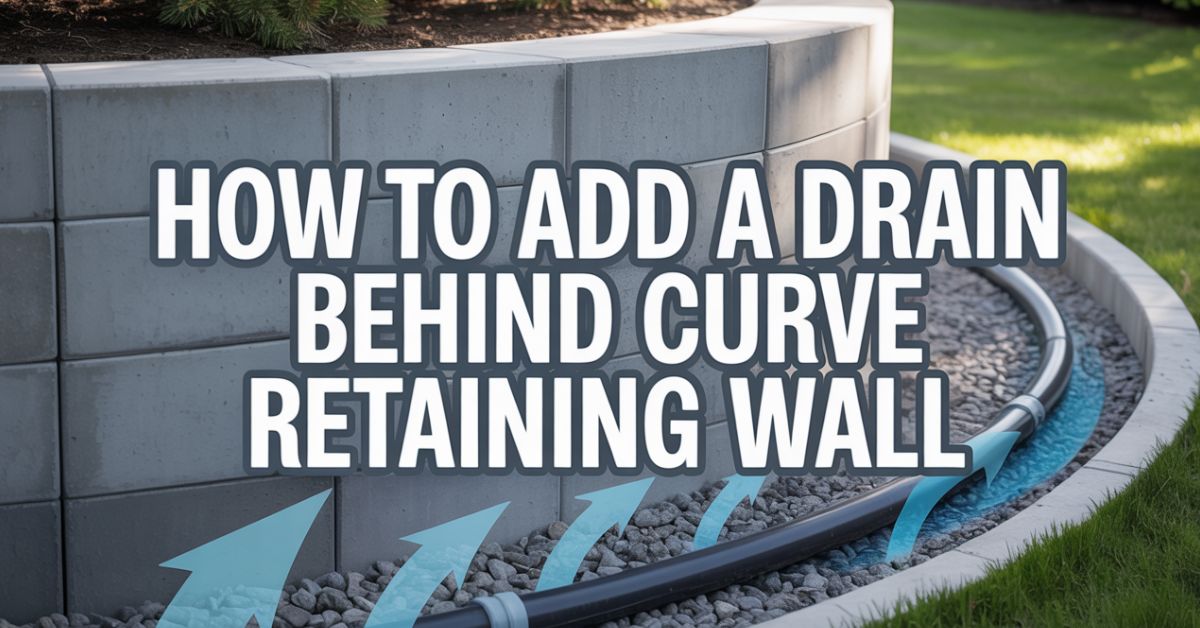
Lay down landscape fabric within the trench second. This prevents soil from clogging the system. Position your perforated drainage pipe over the fabric, ensuring the holes are facing downwards. The pipe should run the entire length of the curved wall.
For optimal results, slope the pipe so water runs away from your wall rather than collecting behind it.
Add Gravel for Support
Once the pipe is installed, cap it with gravel or crushed stone. The gravel functions as a filter, allowing water to enter the pipe freely but preventing soil from entering. Fill in the trench so that the gravel remains several inches below the surface of the wall.
Fold the landscape material over the gravel prior to covering it with soil, in this way, dirt cannot seep in and plug the drain.
Backfill and Finish
The final step is backfilling the area with soil. Pat the soil down firmly, but don’t pack it so tightly that water can’t seep through.
Once you’re done, your retaining wall will not only look great but also last much longer because it has a proper drainage system.
✅ Project Complete: Your retaining wall now has proper drainage and will last much longer!
Final Thoughts
Installing a drain behind a curved retaining wall may appear to be an extra labor of love, but it’s the difference between your wall being sturdy for decades to come and not. No matter if you decide to take on the project yourself or hire concrete contractors in Portland, having good drainage will safeguard your investment and make your outdoor area safe and usable.
Stuck on your wall project? Let the team at Xcelent Concrete Services assist you with guidance and expert solutions.
FAQs
1. Why is drainage important behind a curved retaining wall?
Proper drainage prevents water buildup and hydrostatic pressure, which can cause cracks, bulging, or even failure of the retaining wall over time.
2. What type of drain is best for a curved retaining wall?
A perforated drain pipe (French drain) combined with gravel backfill is the most effective solution for curved retaining walls.
3. How deep should the drain pipe be installed?
The drain pipe should be placed at the base of the wall, slightly below the footing level, to efficiently collect and redirect water.
4. Do I need gravel behind the retaining wall?
Yes, gravel or crushed stone is essential. It improves water flow and prevents soil from clogging the drainage system.