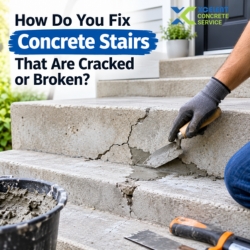
Cracks or broken concrete stairs may usually be repaired by cleaning any loose concrete and patching the area using a proper concrete repair product. But depending on how deep the cracks are and the cause of the cracks – movement, water damage, or wear- proper action will have to be taken to ensure the repairs to fix concrete stairs work well.
What Causes Concrete Stairs to Crack or Break?
Determining the cause of the cracks in your concrete stairs is the first step to repairing them because failing to do so means that the problem will continue to worsen despite trying to repair the crack.
Water Damage and Freeze-Thaw Cycle
Water can seep through the tiny cracks and pores found in concrete stairs. When it freezes in such environments, it expands and causes the surface to flake off and eventually crack. Inhospitable conditions around the concrete stairs, such as poor drainage, will worsen this issue.
Settling or Ground Movement
Concrete stairs require solid ground or adequate support. Failure of which means that the stairs could crack and get out of alignment.
Heavy Loads and Impact
Repeated heavy loads, dropping objects, and impacts can cause damage to stair edges and surfaces. Particularly thin and insufficiently reinforced parts are more prone to cracking.
Poor Installation and Wear
Poorly chosen concrete mixture, insufficient curing, poor reinforcement, or poor preparation of base material can all be the cause of premature damage. Properly installed stairs can wear out due to natural exposure and use.
Repair Methods for Concrete Stairs Step by Step
The following repair techniques are recommended for particular types of damage. Always follow the repair products’ manufacturer instructions.
1. Assessing the Damage
Look for cracks, broken pieces, loose edges, roughness, and movement on each step. Check if the damage affects the surface layer only or penetrates into the concrete itself.
If the stairs move when stepping, there is a crack running through the stairs or the stairs are sinking; refrain from using the damaged part until assessing the damage.
2. Cleaning the Damaged Area
Use a hard brush and appropriate hand tools to clean up dirt, broken concrete, dust, and debris. Chisels can be used to get rid of weak concrete around damaged edges.
Do not simply apply new material over loose or deteriorated concrete. The repair needs a sound surface to bond properly. Wear safety glasses, gloves, and a suitable dust mask when removing concrete.
3. Repair Small Cracks
For narrow, stable cracks that do not indicate structural movement, use a concrete crack filler or repair compound designed for the crack’s size and location.
Clean the crack thoroughly and prepare it according to the product instructions. Apply the filler as directed, ensuring it reaches the intended depth without leaving gaps. Allow it to cure for the specified period before exposing the stairs to foot traffic.
A flexible sealant may be more appropriate for certain joints where movement is expected. Ordinary filler should not be used to disguise a crack that continues to widen.
4. Patch Chipped Edges and Shallow Breaks
For small chips, spalled surfaces, and damaged stair nosings, remove all loose concrete and square or shape the repair area as recommended by the repair product manufacturer.
Apply a suitable concrete patching compound. For vertical faces and stair edges, choose a product specifically designed to stay in place on those surfaces. Shape the material to match the original step and maintain a consistent, safe walking surface.
Avoid leaving raised lips or uneven edges that could become trip hazards.
5. Rebuild Larger Broken Sections
When a substantial corner or section of a tread has broken away, a deeper repair may be necessary. Remove unsound concrete, prepare the substrate, and use a repair mortar or concrete mix suitable for the repair depth and exposure conditions.
Some products require a bonding agent or a specific surface moisture condition. Follow the manufacturer’s instructions rather than assuming every patch needs the same preparation.
After placing the material, finish the surface to match the surrounding stairs. A lightly textured finish is generally preferable to a smooth, slippery surface outdoors.
6. Allow the Repair to Cure
Do not rush the curing process. Protect fresh repairs from rain, extreme temperatures, rapid moisture loss, and foot traffic as directed by the product manufacturer.
Drying time and the time needed before the stairs can be used are not always the same. Check the product’s stated curing and traffic requirements before reopening the steps.
When Should You Hire Concrete Contractors?
Some stairs may be too difficult to fix with DIY repairs. You should contact experienced concrete contractors if you have:
Deep or worsening cracks on a tread or riser.
Stairs that sag, tilt, or become separated from the structure.
Wobbly stairs, exposed reinforcing bars, or extensive deterioration.
Frequent cracks after previous stair repair work.
Any damage that makes the stairs unstable or unsafe to use.
A contractor will tell you whether your stairs need patching, structural repairs, drainage fixes, stabilization of the base, or partial or full replacement. A temporary fix using surface filler will not make the staircase structurally sound again.
How Do You Stop Concrete Stairs From Cracking Again?
The first step in preventing cracked stairs is making sure that no water gets into them and fixing any existing issues early.
- Fix the drainage: Direct the runoff away from the stairs and prevent water from pooling around their base.
- Use a sealer (when applicable): Seal your stairs using an appropriate concrete sealer. Sealing is not the same thing as repairing or improving drainage.
- Regular inspections: Look for cracks, wobbling edges, flaking, or uneven levels of individual stairs.
- Use suitable de-icing products: In freezing climates, choose products appropriate for the concrete and follow their application instructions.
- Repair damage early: Address minor deterioration before water enters deeper cracks or more material breaks away.
- Maintain safe surfaces: Keep stairs clean and preserve adequate traction, particularly in wet or icy conditions.
Get Professional Help for Damaged Concrete Stairs
If your stairs have deep cracks, broken edges, or recurring damage, a professional assessment can help determine the safest and most practical solution. Xcelent Concrete Services can be contacted to discuss your concrete stair repair needs, evaluate the damage, and identify an appropriate repair approach.
Contact Xcelent Concrete Services to discuss your project and determine the next steps to fix concrete stairs.
Frequently Asked Questions
1. Can cracked concrete stairs be repaired without replacing them?
Yes. Stable surface cracks, small chips, and localised edge damage can often be repaired. Replacement may be necessary when the stairs have extensive structural damage or cannot be safely stabilised.
2. What is the best product for repairing concrete stairs?
The best product depends on the damage. Concrete crack fillers suit certain narrow cracks, while repair mortars are designed for chipped edges and broken sections. Select a product compatible with the repair depth and outdoor exposure.
3. Can I use regular cement to patch broken stairs?
Regular cement alone is generally not the best choice because it lacks the aggregate and formulation needed for many concrete repairs. A purpose-made repair mortar or patching compound usually provides a more suitable solution.
4. How long does concrete stair repair take?
Small repairs may take only a few hours to apply, but the total time depends on preparation, product requirements, weather, and curing. Larger repairs can take longer, and the stairs should not be used until the product allows it.
5. Why do concrete stair cracks keep coming back?
Recurring cracks may indicate ongoing settlement, movement, water damage, or an unsuitable earlier repair. The cause should be investigated before applying another patch.