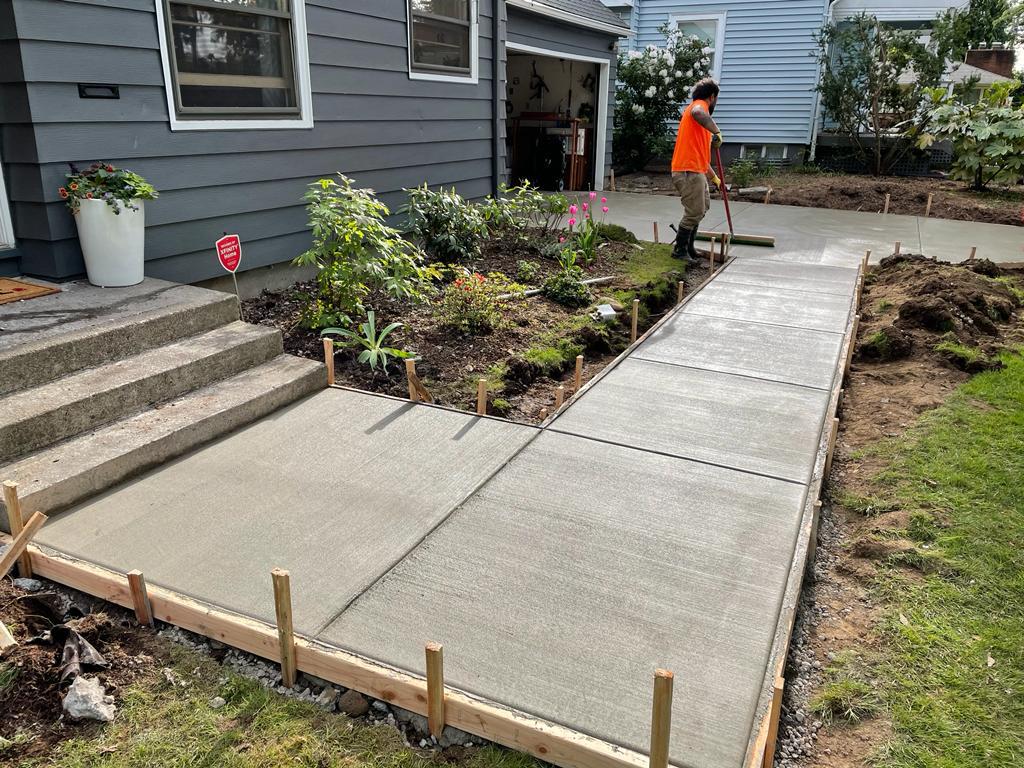
If your concrete driveway, patio, or floor has cracked and is generally showing some age, you likely wonder, “Can new concrete be put over old concrete?” The short answer to that is yes if done correctly. Although the speed and material savings of overlaying new concrete over an older surface cannot be denied, the job does require due diligence in preparation as well as application methods if it is to stick and last. So let it walk you through the important process followed by concrete contractors portland and key considerations and guide you in making the right decision.
Benefits of Pouring New Concrete Over Old Concrete
These benefits include:
1. Cost Savings
It is costly and time-consuming to demolish old concrete and start over. Overlaying new concrete over an existing surface reduces demolition and disposal costs, making it more economical.
2. Time Efficiency
Overlaying is much faster than ripping out old concrete. This makes it especially beneficial for large areas, such as driveways or commercial spaces, where time is a critical factor.
3. Aesthetic Benefit
Overlaying provides a clean, fresh appearance. You can update your space with new finishes or even some decorative features such as stamped or colored concrete.
4. Environmentally Friendly Option
You will save the waste and, therefore, the environment by reusing the existing base.
When to Overlay New Concrete
Overlaying is possible, but not always the best solution. Overlaying works well in the following situations:
Structurally Sound Base: The old concrete must be stable with no severe cracks or movement. Severely damaged concrete may compromise the durability of the new layer.
Proper Thickness: The new layer should be at least 2 inches thick to ensure proper bonding and strength.
No Major Drainage Issues: The existing surface should allow for proper water drainage. Pooling water can weaken the new concrete over time.
If the old concrete shows significant damage or drainage problems, better remove and replace it all.
How to Pour New Concrete Over Old Concrete
For a long-lasting, professional finish, these are the steps to follow.
1. Investigate the Original Concrete Surface
Inspect the concrete that already exists first. Look for cracks and any uneven surfaces. Also, consider other forms of structural damage. Minimal cracks can be repaired, and severe damage might be removed.
2. Clean the surface
This includes cleaning the surface to allow for effective bonding. All dirt, grease, and other debris should be removed with a pressure washer.
3. Fill Cracks and Damages
Cover cracks or holes with a concrete patching compound. For more severe cracks, use epoxy or polyurethane-based fillers. These materials provide much better durability and adhesive properties.
4. Apply Adhesive Bonding Agent
Make sure to apply an adhesive bonding agent, so the new layer of concrete adheres well to the older layer. Bonding agents act as a bridging mechanism between the old and new layers to prevent delamination.
5. Add Reinforcement (If Necessary)
One can also add more strength by using reinforcement like mesh or rebar especially in areas where heavy loads will be applied such as driveways or garage floors.
6. Pour the New Concrete Layer
Mix new concrete and lay it out flat over the existing surface. With a trowel or screed, evenly spread it out and keep the thickness consistent. In any case, maintain at least 2 inches of minimum thickness to avoid chipping or cracking.
7. Finishing and Cure of the Surface
Smooth it out with a trowel or finish with some decorative effects such as stamping or staining. The concrete shall reach maximum strength in at least 28 days, during which extreme temperature and heavy loadings should be avoided.
Avoiding Common Mistakes
No matter how skilled a Portland concrete contractor might be, the fact is overlaying concrete presents its risks and potential pitfalls. Some common mistakes must be avoided in order to make a success:
No Preparation of the Surface
Old concrete is not cleaned and repaired before applying a new layer, thus not sticking properly.
Overlays of Low Thickness
Thin overlays easily crack and get worn out. The new concrete should be of at least 2 inches of thickness.
Failure to Rectify Drainage Issues
The collected water from the poor drainage damages the new layer in the long run.
Rushing the Curing Process
Concrete needs to be cured completely for durability and strength. Let it cure completely.
When to Call Professional Portland Concrete Contractors
While DIY projects can be fulfilling, overlaying concrete requires a great deal of know-how, particularly in large areas or high-traffic areas. A professional concrete contractor Portland can help evaluate your project, prepare it properly, and give you the durable finish. Their experience in materials, techniques, and tools can save time and give a long-lasting finish.
Conclusion
Pouring new concrete over old concrete is a practical solution for refreshing worn-out surfaces, provided the base is stable and properly prepared. Following the steps above and consulting experienced concrete contractors in Portland, you can achieve a durable, cost-effective, and visually appealing outcome. Whether it’s a driveway, patio, or commercial floor, this approach offers an efficient way to revitalize your space without starting from scratch.
If you’re ready to get started or need expert advice, contact trusted Portland concrete contractors to ensure your project is a success. Call Xcelent Concrete today for expert guidance and high-quality concrete solutions in Portland.